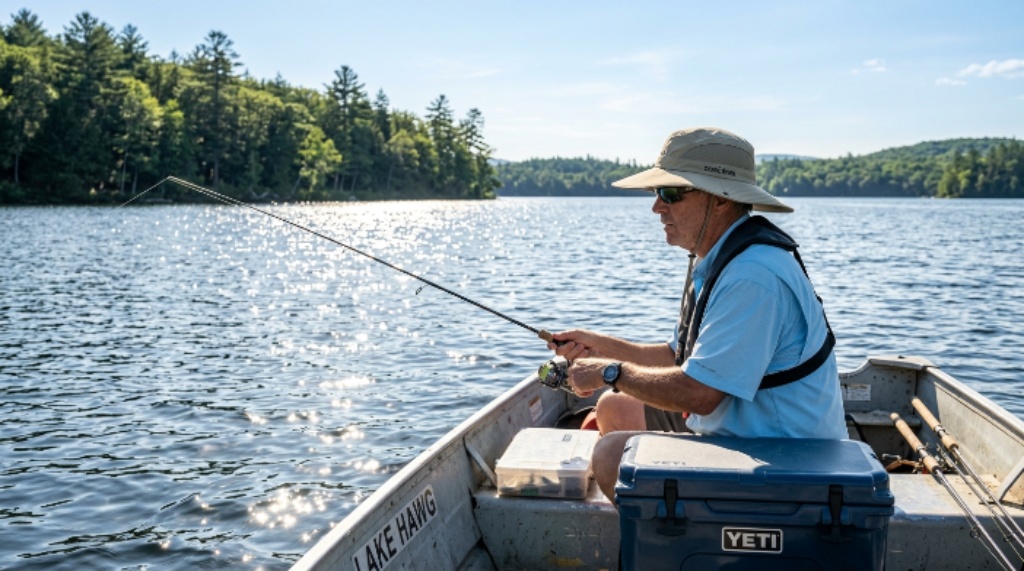
Spending a full day on the water is one of life’s great pleasures. However, the sun does not care how much fun you are having. UV rays reflect off water and hit you from multiple angles at once. This makes anglers especially vulnerable to sunburn, eye damage, and long-term skin problems. The right hat changes everything. This guide will help you choose a fishing hat that protects you properly, fits your style, and holds up through long days outdoors.
Why UV Protection in a Fishing Hat Is Non-Negotiable
Most people think sunscreen is enough. It is not — at least not on its own. Sunscreen wears off, sweats away, and often misses spots on the face and neck. A hat gives you constant, reliable coverage without reapplication.
Water acts like a mirror for sunlight. When the sun reflects off the surface, UV rays hit your face, neck, and ears from below as well as above. This doubles your exposure compared to time spent on dry land. Therefore, a hat designed specifically for fishing offers a real advantage over a casual baseball cap.
Additionally, repeated sun exposure builds up over years. Skin cancer is the most commonly diagnosed cancer worldwide. Protecting yourself now — every single trip — is a simple step that pays off for decades.
Understanding UPF Ratings and What They Mean
You have probably seen the term UPF on clothing tags. UPF stands for Ultraviolet Protection Factor. It tells you how much UV radiation the fabric blocks. A hat with a UPF rating of 50 blocks 98 percent of UV rays. That is the gold standard for sun-protective gear.
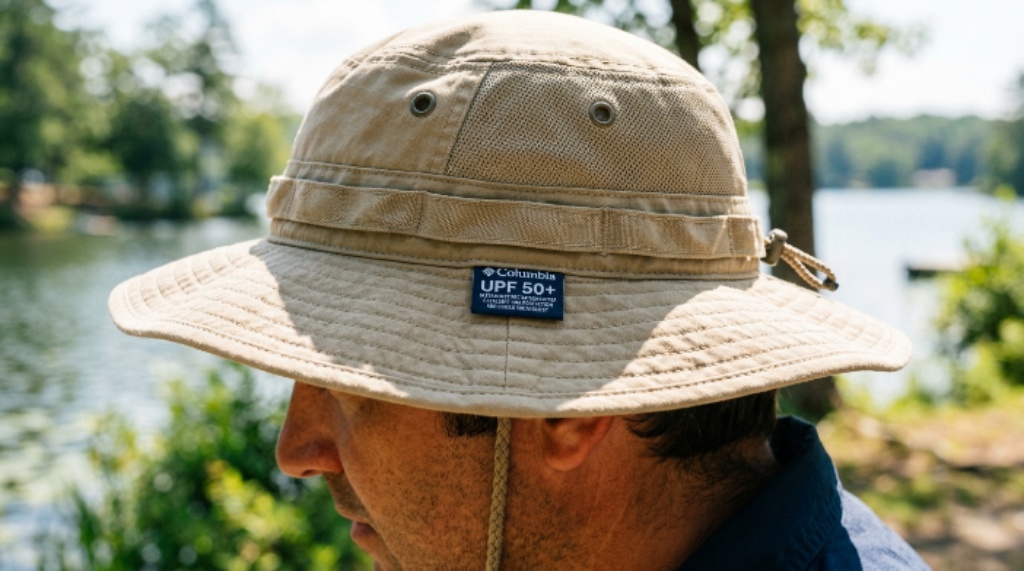
UPF 50+ fishing hats are the top choice for serious anglers. The “+” means the fabric exceeds the base UPF 50 threshold. When you are spending six to ten hours on the water, that extra level of protection matters.
Not all hats carry a UPF rating. A plain cotton baseball cap, for example, typically offers a UPF of only 5 to 15. That is far too low for a full day of fishing. Always look for a certified UPF rating on the label before you buy.
Key Features to Look for in a Fishing Hat
Choosing the right hat involves more than just picking one that looks good. Several features directly affect how well it protects you and how comfortable you will feel wearing it all day.
Brim Size and Coverage
The brim is your first line of defense. A wider brim means more shade over your face, neck, and ears. For fishing, look for a brim of at least three inches all the way around. A full 360-degree brim — sometimes called a bucket hat or boonie hat style — covers more area than a cap with only a front brim.
Some hats feature a longer back flap that extends down to protect the neck. This is an excellent feature, especially for those who fish in open boats with no overhead shade.
Fabric and Breathability
Heavy fabric traps heat. On a hot summer day, that becomes unbearable fast. Look for lightweight, moisture-wicking materials such as nylon, polyester blends, or technical fabrics designed for outdoor use. These materials dry quickly when they get wet from sweat or splashing water.
Mesh panels on the crown or sides improve airflow significantly. A well-ventilated hat keeps your head cooler and makes it easier to wear for long periods.
Fit and Adjustability
A hat that blows off in the wind is useless on the water. Look for an adjustable chin strap or drawcord. This keeps the hat secure when you are moving the boat or dealing with a breeze. An internal sweatband also improves fit and keeps sweat from dripping into your eyes.
Many fishing hats come with an adjustable back strap as well. This allows you to get a snug, personalized fit regardless of head size.
Color and UV Reflectivity
Darker colors absorb more UV radiation and prevent it from passing through the fabric. However, they also absorb more heat. Many manufacturers solve this by using tightly woven light-colored fabrics that are treated to block UV rays chemically. Either approach can work, so focus on the UPF rating rather than color alone.
Types of Fishing Hats Explained
There is no single best style. The right type depends on where and how you fish.
Boonie hats offer full 360-degree brim coverage and are ideal for open-water fishing. They are lightweight, packable, and widely available with high UPF ratings. Many anglers prefer them for offshore and lake fishing.
Bucket hats are similar in shape but often have a shorter brim. They work well for those who prefer a lower profile. They are also easy to pack flat in a tackle bag.
Legionnaire hats include a fabric flap at the back that covers the neck and sometimes the ears. These are outstanding for sun safety for fishing in extreme heat or at high altitude where UV intensity increases.
Caps with sun shields are standard baseball caps fitted with a detachable neck and face guard. They offer versatility — wear the cap alone or add the shield when the sun gets intense.
Wide-brim straw hats are popular in warm coastal areas. Some are treated to achieve decent UPF ratings, though they tend to be less durable than synthetic options.
How to Evaluate Hat Quality Before Buying
Do not rely on appearance alone. Here are a few practical ways to assess a hat before purchasing it.
Hold the fabric up to a light source. If light passes through easily, the weave is too loose to block UV effectively. A tighter weave — where little to no light comes through — indicates better protection.
Check the label for a certified UPF rating. Reputable brands submit their products to independent testing labs. Look for certifications from recognized textile safety organizations.
Read reviews from other anglers, not just general outdoor enthusiasts. Fishing-specific feedback will tell you how the hat holds up on the water, how well the brim stays stiff in wind, and whether the sweatband holds up after repeated wetting and drying.
Caring for Your Fishing Hat to Maintain UV Protection
A hat’s UV protection can degrade over time if it is not cared for properly. Washing it incorrectly can damage the fabric’s protective properties.
Follow the care label instructions exactly. Most technical fishing hats can be hand-washed with mild soap and air-dried. Avoid machine washing on hot cycles and never put a structured hat in the dryer.
Additionally, replace your hat regularly. General guidance suggests replacing sun-protective clothing every one to two years with heavy use, as repeated washing and sun exposure gradually reduce effectiveness.
Store your hat away from direct sunlight when not in use. Prolonged UV exposure — even when you are not wearing it — can degrade the fabric faster.
Top Tips for Maximum Sun Safety on the Water
A good hat is one part of a complete approach to outdoor sun hats and overall sun protection. Combine it with these practices for the best results.
- Apply broad-spectrum SPF 30 or higher sunscreen to all exposed skin, including lips and ears.
- Wear UV-blocking sunglasses to protect your eyes from reflected glare.
- Use a lightweight long-sleeve UPF shirt to cover your arms.
- Seek shade during peak sun hours, typically between 10 a.m. and 4 p.m.
- Reapply sunscreen every two hours, or immediately after swimming or heavy sweating.
No single item does everything. However, a quality hat anchors your entire sun protection strategy and works quietly in the background all day long.
Conclusion
Picking the right UV protection fishing hat is a straightforward decision once you know what to look for. Start with a certified UPF rating — UPF 50+ fishing hats offer the highest level of fabric-based protection available. Then consider the brim size, fabric breathability, fit, and adjustability. Match the hat style to the type of fishing you do most. Take care of the hat properly so it maintains its protective qualities over time. And remember, the hat works best as part of a broader approach to sun safety for fishing that includes sunscreen, UV clothing, and good timing habits.
The water is a beautiful place to spend your time. With the right gear, you can enjoy every hour of it without paying for it later.
Frequently Asked Questions
What UPF rating is best for a fishing hat?
UPF 50+ is the highest and most effective rating available. It blocks 98 percent or more of UV radiation. For long days on the water, this is the rating you should always look for.
Can a regular baseball cap protect me from the sun while fishing?
A standard baseball cap provides very limited UV protection, typically UPF 5 to 15. It also only shades the front of your face. For fishing, a wide-brim hat with a certified UPF rating is a much safer choice.
Do UPF hats lose their protection after washing?
Yes, over time, repeated washing can reduce UPF effectiveness. Always follow the care instructions on the label, use mild soap, and air-dry the hat to extend its protective lifespan.
How wide should the brim be on a fishing hat?
For adequate sun protection while fishing, look for a brim of at least three inches all the way around. A full 360-degree brim or an added neck flap provides the most coverage.
Are expensive fishing hats worth it compared to cheap ones?
Price does not always equal quality, but reputable brands that invest in third-party UPF testing and quality fabrics tend to produce more durable and reliably protective hats. Read labels carefully and check for a certified UPF rating regardless of price point.
Related Topics:
iPhone 7 Plus VS Samsung Galaxy S7 edge: The ultimate battle of the heavyweights
How to choose a laser printer for home? – Tips for everyone