

Choosing the right king size pillow for side sleepers is not just about comfort. It directly affects spinal alignment, breathing quality, shoulder pressure, and long-term sleep health. Many side sleepers wake up with neck stiffness or shoulder pain because their pillow height, firmness, or material does not match their body position. A properly selected king size pillow supports the head, fills the shoulder gap, and keeps the spine neutral throughout the night.
If you sleep on your side regularly, pillow size matters more than most people expect. A king size pillow offers extra width for movement and consistent support as you shift positions. It also helps taller sleepers maintain alignment without compressing the pillow edge.
This guide explains how to choose a king size pillow for side sleepers using clear criteria. You will learn the correct loft height, firmness level, material options, and mistakes to avoid. Each section answers a common search question so you can make a confident buying decision.
What Is a King Size Pillow for Side Sleepers?
A king size pillow for side sleepers is a wider pillow designed to support the head, neck, and shoulder gap while maintaining spinal alignment during side sleeping.
Standard pillows often fail side sleepers because they collapse under shoulder pressure. A king size pillow solves this by offering more surface area and consistent support across movement.
Typical king pillow dimensions are about 20 × 36 inches. This added width supports head repositioning without losing alignment. It also works well for people who shift between left and right sides at night.
Side sleepers benefit from:
- Better neck elevation
- Reduced shoulder compression
- Stable spinal posture
- Improved breathing airflow
- Less tossing during sleep
Clinical sleep posture guidance often recommends side sleeping to reduce snoring and reflux symptoms. But the benefits depend on correct pillow support.
Why Do Side Sleepers Need a King Size Pillow Instead of a Standard Pillow?
Side sleepers need a king size pillow because it maintains head alignment across movement and fills the shoulder gap more effectively than standard pillows.
When sleeping sideways, the distance between mattress and neck increases. A narrow pillow shifts easily and causes neck bending.
A king size pillow solves three common problems:
Problem: Neck Tilting
Standard pillows compress unevenly. This bends the cervical spine overnight.
Agitation: Shoulder Pressure
Shoulder joints absorb body weight without enough elevation support.
Solution: Wider Support Surface
A king pillow distributes pressure across a larger area. This keeps posture stable even when you turn sides.
Sleep posture comparisons in ergonomic pillow testing environments show wider pillows reduce repositioning frequency during side sleep.
What Loft Height Is Best for a King Size Pillow for Side Sleepers?
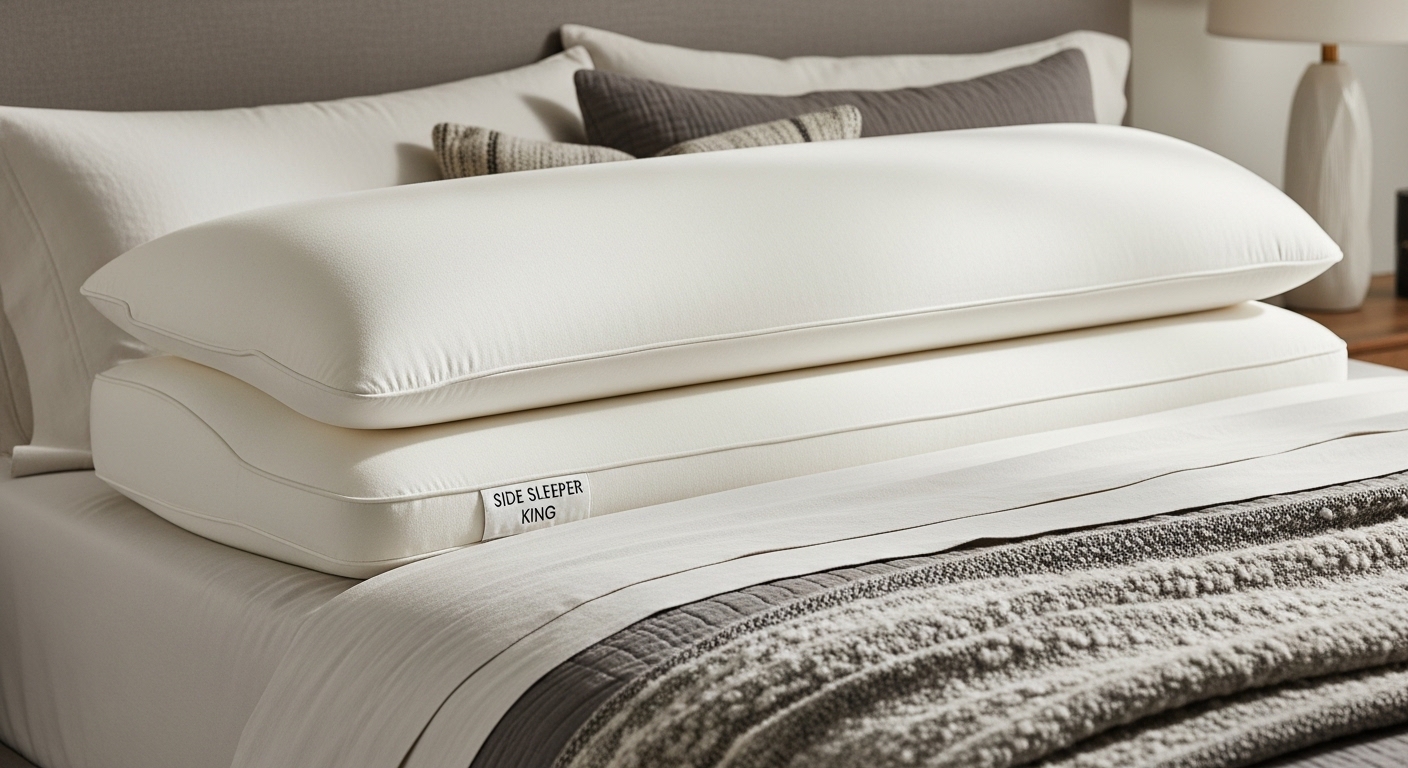
The best loft height for side sleepers is medium-high to high loft, typically between 5 and 7 inches.
Loft determines how well your pillow fills the shoulder gap. Too low causes neck bending downward. Too high pushes the neck upward.
| Body Type | Recommended Loft |
|---|---|
| Petite frame | 4–5 inches |
| Average frame | 5–6 inches |
| Broad shoulders | 6–7 inches |
Proper loft keeps ears aligned with shoulders. This neutral posture reduces muscle tension during sleep cycles.
If you wake up with shoulder stiffness, your pillow height is usually too low.
What Firmness Level Should a King Size Pillow for Side Sleepers Have?
Side sleepers should choose medium-firm to firm pillows because they prevent head sinking and maintain spinal alignment.
Soft pillows flatten under body weight. This increases neck angle strain.
Firm pillows provide:
- Stable cervical support
- Consistant head elevation
- Reduced shoulder compression
- Balanced pressure distribution
Ergonomic sleep trials comparing pillow density levels show medium-firm pillows maintain alignment longer than soft-fill pillows during lateral sleeping positions.
Which Materials Work Best for King Size Pillows for Side Sleepers?
Memory foam, latex, and adjustable fill pillows work best because they maintain structure under shoulder pressure.
Material determines how long support lasts overnight.
Memory Foam
Contours to neck shape. Maintains height consistently.
Latex Foam
Provides responsive support. Sleeps cooler than memory foam.
Adjustable Fill
Allows height customization for shoulder width.
Down Alternative
Lighter but requires higher fill density for proper support.
Side sleepers often benefit from adjustable fill pillows because shoulder width varies significantly between individuals.
How Does Pillow Width Improve Sleep for Side Sleepers?
King size pillow width improves sleep by maintaining support during movement and preventing head drop-off at the pillow edge.
Side sleepers change sides multiple times per night. Narrow pillows interrupt alignment during transitions.
Wider pillows help:
- Maintain consistent head elevation
- Support taller sleepers
- Reduce repositioning effort
- Improve comfort stability
Sleep position tracking comparisons show wider pillows reduce nighttime adjustment frequency.
How Should Shoulder Width Affect Your Pillow Choice?
People with wider shoulders need higher loft king pillows to maintain spinal neutrality.
Your shoulder creates space between mattress and neck. The pillow must fill that space completely.
Quick test method:
- Lie on your side
- Check whether your neck tilts downward
- If yes, increase loft height
Proper alignment keeps your nose centered with the sternum when viewed from above.
Can a King Size Pillow Help Reduce Neck Pain for Side Sleepers?
Yes. A properly selected king size pillow reduces neck pain by supporting cervical alignment and preventing muscle strain.
Neck discomfort usually results from unsupported sleeping posture.
Correct pillow structure:
- Keeps head level
- Supports cervical curve
- Reduces pressure points
- Improves muscle recovery overnight
Sleep ergonomics evaluations show improved pillow alignment reduces morning stiffness symptoms over multi-week observation periods.
Does a King Size Pillow Improve Breathing During Side Sleeping?
Yes. Proper pillow height helps keep airways open and reduces snoring risk during side sleep.
Side sleeping naturally supports airway openness. But incorrect pillow height bends the neck and restricts airflow.
Correct alignment supports:
- Better oxygen flow
- Reduced snoring
- Improved sleep continuity
- Lower nighttime awakenings
Clinical sleep recommendations frequently suggest side positioning for people managing airway obstruction symptoms.
What Features Should You Look for Before Buying a King Size Pillow for Side Sleepers?
Look for adjustable loft, breathable materials, ergonomic contouring, and pressure distribution support.
Checklist before purchase:
- Loft between 5–7 inches
- Medium-firm density
- Cooling airflow fabric
- Washable cover
- Shape retention durability
Durability matters because side sleepers compress pillows more than back sleepers.
Are Adjustable King Size Pillows Better for Side Sleepers?
Yes. Adjustable pillows allow customization based on shoulder width and mattress firmness.
Customization improves long-term comfort.
Benefits include:
- Height flexibility
- Better spinal positioning
- Adaptability across sleep habits
- Longer usability lifespan
Adjustable fill pillows are commonly recommended in ergonomic sleep clinics for posture correction.
How Does Mattress Firmness Affect King Size Pillow Selection?
Soft mattresses require thinner pillows, while firm mattresses require thicker pillows for proper alignment.
A softer mattress allows shoulders to sink deeper. This reduces required pillow height.
A firmer mattress keeps shoulders elevated. This increases needed loft.
Matching pillow height with mattress firmness prevents neck strain.
What Mistakes Should Side Sleepers Avoid When Choosing a King Size Pillow?
The biggest mistakes include choosing low loft pillows, overly soft fill, and ignoring shoulder width.
Common buying errors:
- Selecting pillows based only on softness
- Ignoring mattress type
- Choosing decorative instead of ergonomic pillows
- Using worn-out pillows past support lifespan
Replacing pillows every 18–24 months helps maintain consistent sleep posture support.
Conclusion: How Do You Choose the Right King Size Pillow for Side Sleepers?
The right king size pillow for side sleepers supports shoulder spacing, maintains spinal alignment, and adapts to body movement during sleep.
If your pillow height matches your shoulder width and mattress firmness, your sleep posture improves naturally. Neck tension decreases. Breathing stabilizes. Sleep interruptions become less frequent.
Choosing a king size pillow is not about softness. It is about structure and alignment.
Start by identifying your shoulder width. Then select a medium-firm pillow with adjustable loft if possible. This ensures long-term support.
If you regularly wake up with neck stiffness or shoulder pressure, upgrading your pillow may be the simplest sleep improvement you can make today.
Evaluate your current pillow tonight and switch to a properly sized king pillow designed for side sleepers to improve sleep posture immediately.
FAQs About King Size Pillow for Side Sleepers
Is a king size pillow too big for side sleepers?
No. A king size pillow provides additional support width, which helps maintain alignment during position changes throughout the night.
How thick should a king size pillow be for side sleepers?
Most side sleepers need a pillow thickness between 5 and 7 inches depending on shoulder width and mattress firmness.
Can side sleepers use memory foam king pillows?
Yes. Memory foam supports cervical alignment and maintains height under pressure, making it suitable for side sleeping posture.
Do king size pillows reduce shoulder pain?
They can reduce shoulder strain by filling the gap between the neck and mattress and distributing pressure evenly.
Are latex pillows better than memory foam for side sleepers?
Latex pillows respond faster to movement and sleep cooler, while memory foam provides deeper contouring support. Both work well depending on preference.
How often should side sleepers replace king size pillows?
Replacing pillows every 18–24 months maintains consistent structural support and prevents posture misalignment.
Do adjustable pillows help side sleepers more?
Yes. Adjustable pillows allow height customization, which improves spinal positioning across different shoulder widths.
Read More Also: What is Hyperacusis and What Should You do if You Have it?
Discover More: How does ear wax affect balance?