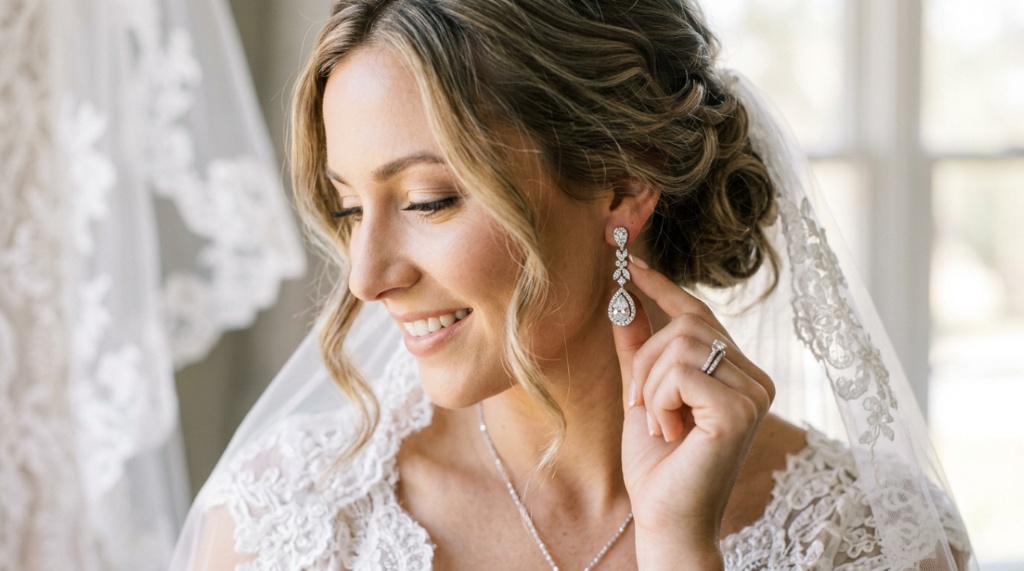
You’ve found the dress, booked the venue, and tasted the cake. But when you stand in front of the mirror on your big day, your ears will be one of the first places your guests’ eyes are drawn to. Cheap, dull jewelry can undermine even the most expensive gown. Meanwhile, finding genuinely luxurious pieces that don’t cost a fortune feels like a daunting treasure hunt. You want that high-end, designer aesthetic—without the high-end price tag. The good news? Spotting premium looking earrings is a skill you can master in minutes, saving you time, money, and last-minute panic.
What Actually Makes Earrings Look Premium Versus Cheap?
The difference between “Budget Buy” and “Bridal Luxury” isn’t always the price tag. It’s about the visual and tactile cues that signal quality to the human eye. A $30 pair can look like $300 if the design and materials are chosen carefully.
Material Composition: The Metal Matters
Look for sterling silver, 14k gold fill, or 18k gold vermeil rather than basic costume metal. Gold vermeil, which has a thick layer of gold over sterling silver, offers that rich, warm glow that mimics solid gold. Avoid pieces labeled simply as “gold tone” or “fashion metal,” as these often look brassy and dull up close.
The Sparkle Factor: Stone Setting Techniques
Premium pieces use prong settings or micro-pavé that allow maximum light to pass through stones. Cheaper earrings often use glue or thick bezels that block light. Hold the earring up to a light source—premium stones will refract light with sharp, bright flashes (known as “fire”) rather than looking flat or milky.
Weight and Balance: The Heft Test
A flimsy, feather-light earring often signals hollow construction or thin metal. While you don’t want heavy ears by the end of the night, premium looking earrings have a surprising amount of substance. The weight should feel substantial but not painful, indicating solid backing plates and durable clasps.
Finish and Polish: The Micro-Detail Check
Run your finger over the surface. Premium earrings have a mirror-like finish with no rough edges, sharp seams, or visible solder points. Check the back of the earring—if the back looks as good as the front, it’s a sign of meticulous craftsmanship.
Why Does Metal Color Influence the Perceived Value?
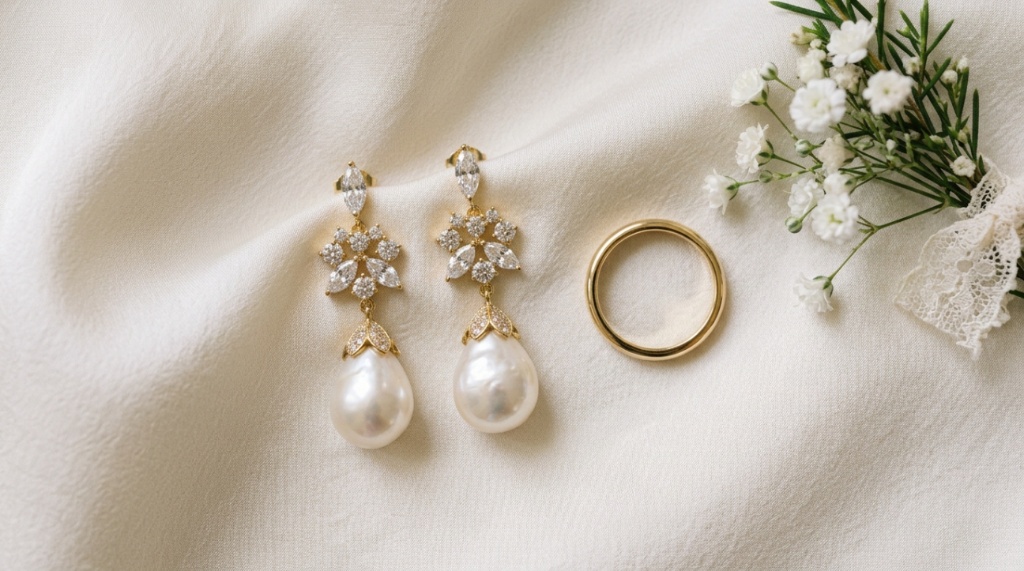
The hue of your metal sets the entire tone of your bridal look. Choosing the wrong tone can make even expensive earrings look off, while the right tone enhances both your skin and your dress. It is arguably the most critical factor in appearing high-end.
Warm Gold vs. Cool Silver: Which Sells the Look?
Warm gold tones (like yellow gold) immediately evoke classic luxury and pair beautifully with ivory, champagne, and blush dresses. Cool silver/platinum tones offer a sleek, modern, and icy sophistication that complements white and diamond-white gowns. For a universally flattering premium look, rose gold bridges the gap, adding a romantic, vintage touch. Remember: the metal must match your other jewelry (bracelet, ring, hairpiece) to look intentional,Planning the perfect wedding day is just the beginning of your journey together; keeping the romance alive long after the ceremony requires exploring 7 incredible ways of spicing up a relationship to maintain that lifelong connection.”
Mixing Metals: A Modern Premium Trick
Fashion-forward brides can intentionally mix silver and gold. However, to do this successfully, the earrings themselves must feature both metals in a deliberate design (like a two-tone hoop). If you mix separate pieces, keep the finish consistent—all matte or all shiny—to avoid a cluttered look.
Rhodium Plating: The Secret to High-End Shine
Many premium looking earrings utilize rhodium plating—a hard, silvery-white metal that resists scratching and gives a mirror-like finish. This plating prevents tarnishing and keeps the earring looking brand new hours into the reception. Always ask if the piece is rhodium-plated; it is a hallmark of quality.
How Do You Match Earrings to Different Necklines?
The neckline of your dress will dictate the silhouette and length of your earrings. A mismatch here is the fastest way to ruin your overall proportions. Correct styling tricks make the eyes focus on your face, not just the jewelry.
Strapless and Sweetheart: The Versatile Choices
You have the most freedom here. Chandeliers, drop earrings, and large studs all work. For a romantic sweetheart, opt for a soft diamond drop that sits just below the jawline. For strapless, you can go bold with a structured chandelier that fills the empty space.
High Neck and Turtleneck: Skip the Earrings
When your neck is covered, long earrings can clash with the fabric. Instead, choose tight-fitting studs or small hoops that sit directly on the earlobe. If you must wear a drop, keep it extremely short—maximum 1 inch—to maintain clean lines.
Off-Shoulder and Illusion: Medium Drops
These necklines frame the shoulders beautifully. Choose medium-length drop earrings (2–3 inches) that dance along the collarbone. Avoid heavy chandeliers that compete with the intricate neckline detail; go for line or bar drops to elongate the neck elegantly.
Which Earring Styles Photograph Best in Wedding Pictures?
In photos, small details get lost. What looks subtle in person can vanish entirely in professional photography. To ensure your earrings make a statement in your album, you need high-contrast, light-capturing designs.
The “Light Catcher” Rule for Flashes
Look for earrings with high-polish metal and brilliant-cut stones. These act as catchlights. When the flash goes off, they will produce tiny sparkles that draw the eye. Matte finishes or opaque stones (like some opaque turquoise or onyx) absorb light, making your ears look empty in images.
Versus: Dangle vs. Stud for Photo Longevity
Studs are safe, but they can look like “nothing” in wide shots. Dangles and drops provide movement. As you turn your head between shots, a drop earring will swing slightly, creating a dynamic, lively look. If you want to ensure visible earrings in every photo, always prioritize a drop silhouette over simple studs, unless the stud is oversized (like a 10mm+ pearl).
Surface Area: Bigger Does Not Mean Tacky
Large, sleek hoops or wide chandeliers photograph exceptionally well because they catch light from various angles. Do not be afraid of larger sizes for the bridal day. The key is the design—solid, glossy, or pavé-filled looks premium, while highly textured or mesh designs can look heavy or dated in photos.
Can You Wear Costume Jewelry and Look High-End?
Yes, but only if you follow the “pass the 5-foot test” rule. If your wedding budget is tight, clever styling can elevate even plastic or resin pieces, provided they mimic luxurious materials effectively.
Resin and Lucite: The High-Fashion Exception
Clear lucite or glass-like resin can look incredibly expensive if they are polished and shaped flawlessly. Think of Crystal Clear Teardrops—they look like aquamarine or morganite. Avoid colored resin unless it is a deep, rich jewel tone (emerald green, sapphire blue) that matches your palette exactly.
Pearls: Real, Faux, or Semi-Baroque?
Real pearls are lovely, but high-quality faux pearls (like those made in Japan with a glass core) are virtually indistinguishable in photos. The trick is to choose slightly irregular, baroque-shaped pearls rather than perfectly round ones. Uniform roundness looks fake; natural variation looks curated and bespoke.
Checking the Hardware: The Hidden Giveaway
Cheap earrings usually have brass or bright yellow tinted clasps. Premium looking earrings use stainless steel or sterling silver posts to prevent irritation and look neutral from behind. Always turn the earring over and inspect the hook or post—the finish on the hardware tells the truth about quality.
What Is the “Cost-Per-Wear” Rule for Bridal Earrings?
Wedding earrings are unique because you can reuse them for anniversaries, date nights, and formal events. When calculating your budget, do not just look at the price tag; look at how often you will actually wear them again.
Budgeting for High-Impact Materials
If an earring is $80 but you will wear it 20 times, that is $4 per wear. If an earring is $30 but you will never wear it again, that is $30 for one use. Invest more in versatile silhouettes—like diamond studs or a classic gold drop—that can transition to office wear or casual weekend wear.
The Versatility vs. Unique Design Trade-Off
Very unique, themed earrings (like seashell motifs) are beautiful for a beach wedding but rarely get worn again. To maximize value, purchase classic styles with unique texture (e.g., a classic hoop with a twisted rope design) instead of literal shapes (like actual seashells or flowers).
Rental Options and Borrowing
Consider borrowing a pair from a friend or family member. If you can find heirloom pieces, they often have a patina and craftsmanship impossible to buy new. Alternatively, rent high-end pieces from online bridal rental services—this gives you access to $500 earrings for $50 without the commitment.
How to Check the Durability Before the Ceremony?
Prevention is better than cure. You do not want to lose a stone during your first dance. Here is a simple 3-step resistance test you can do at home or in the store.
The 5-Second Twist Test
Hold the stone or main decorative element between your thumb and forefinger. Gently twist it. If the stone moves even a millimeter, the setting is loose. This indicates poor craftsmanship and a high likelihood of loss.
The Tape Test for Snags
Take a piece of nylon stocking or tissue paper. Rub it across the back and edges of the earring. If it snags or pulls, the metal has burrs or rough edges. That will catch your hair or dress throughout the day—and hurt!
The Shake Test for Noise
Shake the earring next to your ear. Premium stones are set tight; they do not rattle. A rattling sound usually means the stone is glued in and will eventually fall out. Also, check the hinge on dangle earrings—it should snap open and closed with a firm click, not wobble loosely.
Is It Worth Buying Online vs. In-Store?
Online shopping often offers a wider variety and lower prices for premium looking earrings. However, you cannot physically inspect the piece. Knowing the differences between these channels helps mitigate risk.
Advantages of Online Retailers (and What to Avoid)
Online stores often have higher quality control because they ship globally. However, avoid sellers who use stock photos only and do not provide close-up videos. If the site offers free returns, buy a backup pair at a lower cost to compare. Look for detailed descriptions including metal weight (in grams) and stone size (in carats or millimeters).
The Benefits of Boutiques and Marketplaces
Buying locally allows you to try on the earrings with your veil. This is crucial for checking the weight on your specific ears. Additionally, local artisans can often modify earrings (shorten drops) for a small fee. Support small businesses for unique, limited-run pieces that feel exclusive.
Reading Reviews for “Real Life” Look
Always look at customer-photo reviews before purchasing. These show how the earrings look on a real ear, not on a studio mannequin. Pay attention to photos taken in natural sunlight; they reveal the true color and brilliance.
When Should You Buy Your Wedding Earrings?
Timing affects your ability to shop effectively and get alterations or exchanges. Rushing leads to compromise. Planning prevents a mediocre jewelry choice.
The 60-Day Decision Window
Start your search at least 2 months before the wedding. This gives you time to order samples, test them with your hair up and down, and return the ones that do not work. Avoid buying in the final two weeks unless you have already decided on a specific pair.
The “First Look” Photography Test
If you are having a first-look photoshoot, wear the earrings for a full day in your house before that day. This ensures they do not cause an allergic reaction and that they stay secure. Compliment your testing by trying them with your veil to see if the veil snags on them.
Backup Pair Strategy
Preparedness is key. Always buy a cheap backup pair of similar style, but just drop them in your emergency kit. If a stone falls out of your main pair at the reception, you have a disposable replacement that still looks good. This is standard practice for professional stylists.
Frequently Asked Questions
Should earrings match the wedding dress or the bridesmaids’ dresses?
Your earrings should match your dress and skin tone primarily. However, they can incorporate a subtle accent color from the bridesmaids or the floral palette to tie the entire visual story together, provided the metal finish matches your other jewelry.
Are sterling silver earrings safe for sensitive ears?
Yes, sterling silver is generally safe, but it can tarnish on moist skin. Choose sterling silver with rhodium plating for an extra hypoallergenic barrier. If you have severe sensitivities, consider surgical-grade stainless steel or pure platinum, which are the most biocompatible.
How long should drop earrings be for a wedding?
Typical bridal drop earrings range from 1 to 3 inches in length. A 2-inch drop is the most flattering average, drawing the eye to the collarbone without overpowering the face. Test the length against the width of your neck—longer drops suit longer necks.
Can I wear white gold earrings with a silver necklace?
Yes, you can. The key is to ensure both metals have the same finish—both polished or both brushed. Mixing white gold and platinum is acceptable because they are visually similar. Avoid mixing white gold with matte gunmetal or dark grey to prevent a clash.
What is the best way to clean wedding earrings before the ceremony?
Use a gentle jewelry cleaner or a mixture of lukewarm water and a drop of dish soap. Use a soft baby toothbrush to scrub behind the stones. Rinse thoroughly and pat dry with a lint-free cloth. Do NOT bathe in perfume or hairspray after cleaning.
Is it okay to wear chandelier earrings with a veil?
Yes, but you must be careful. Low-hanging veils can tangle. Opt for a blusher veil that stays behind the ears or a fingertip veil that loops over the shoulders. If your veil is attached high on the crown, long chandeliers are perfectly fine.
Does the cost of earrings affect the overall look?
Not inherently. A $20 pair with refined styling, correct metal tone, and high polish can absolutely look more premium than a $200 pair with a poor design. Cost only matters if it reflects quality craftsmanship—focus on the four C’s: Cut, Clarity, Color, and Craftsmanship, not the price tag.
Choosing premium looking earrings isn’t about spending excessively; it’s about critical evaluation of material, design, and proportion. By using the heft test, checking the finish, and matching the silhouette to your gown, you will secure a pair that makes you feel like royalty. Apply these tips today and take one more worry off your wedding planning checklist.