Indoor plants make homes in Austin feel fresh, calming, and more connected to nature. However, warm temperatures and indoor humidity can also attract unwanted pests like silverfish and centipedes. Studies show that nearly 14% of household pest complaints in humid regions involve moisture-loving insects. In addition, indoor plant soil creates the perfect hiding space for crawling pests when homeowners overwater or ignore drainage issues. Many residents search for ways to get rid of silverfish and centipedes in plant pots because these pests quickly spread in damp indoor spaces. Fortunately, Austin homeowners can prevent infestations with simple cleaning habits, moisture control, and smart plant care techniques.
Why Silverfish and Centipedes Enter Indoor Plant Pots
Silverfish and centipedes prefer dark, moist, and quiet environments. Indoor plant pots often provide all three conditions in one small area. Moist soil, decaying leaves, and standing water create a comfortable shelter for pests. Furthermore, indoor heating and air conditioning can increase humidity fluctuations that attract crawling insects.
Austin’s climate also contributes to the problem throughout much of the year. The city experiences warm temperatures and seasonal humidity that encourage pest activity indoors. During rainy weeks, excess moisture around windows and indoor plants increases pest movement. As a result, homeowners often notice insects hiding under pots or inside saucers.
Signs Your Indoor Plant Pots Have Pest Problems
Homeowners usually spot signs of pests before seeing the insects themselves. Small holes in leaves, yellowing foliage, or unusual soil movement often indicate hidden activity. In addition, silverfish leave behind tiny scales and droppings near pots and baseboards. These warning signs help homeowners act before infestations grow larger.
Centipedes usually hide during the daytime and appear at night. However, homeowners may notice them running quickly near plant shelves or bathroom corners. Silverfish move more slowly but gather around damp paper, cardboard, or mulch near indoor plants. Therefore, regular inspection helps catch problems early.
Common Warning Signs
- Damp soil that never fully dries
- Tiny insects around saucers or drainage holes
- Curled or damaged leaves
- Musty smells near plant shelves
- Pest sightings during nighttime hours
Choose the Right Indoor Plants for Austin Homes
Some indoor plants require constant moisture, while others thrive in drier conditions. Homeowners in Austin often reduce pest risks by choosing plants that tolerate moderate watering. Snake plants, pothos, and ZZ plants grow well indoors without excessive moisture. Consequently, they create less attraction for silverfish and centipedes.
Plants that need wet soil all the time may encourage pest activity. Ferns and tropical varieties often increase humidity around the pot area. However, homeowners can still grow these plants successfully with proper airflow and drainage. The key lies in balancing moisture without creating damp hiding spaces.
Improve Drainage in Plant Pots
Good drainage remains one of the most effective ways to stop pests from settling in indoor pots. Waterlogged soil attracts insects because it stays cool and damp for long periods. Therefore, homeowners should always use pots with proper drainage holes. Decorative containers without drainage often trap excess moisture underneath the plant.
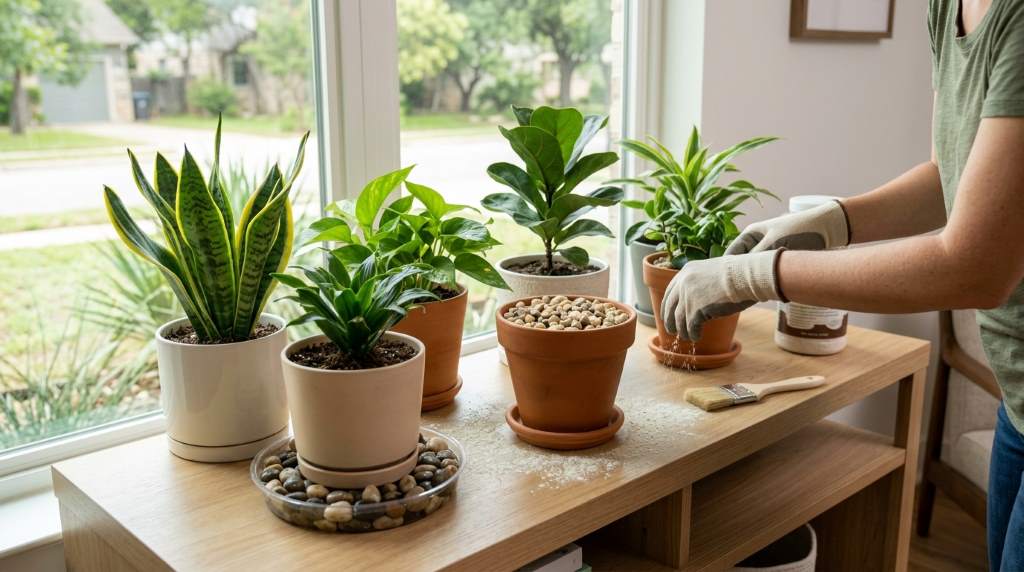
Adding a layer of small rocks or coarse soil mix also improves water flow. In addition, homeowners should empty drainage saucers after watering. Standing water beneath pots becomes a breeding zone for many moisture-loving pests. Better drainage keeps the soil healthier and less attractive to insects.
Drainage Tips for Indoor Plants
- Use pots with multiple drainage holes
- Avoid overfilling saucers with water
- Replace compacted soil every year
- Choose lightweight indoor potting mix
- Keep pots elevated when possible
Water Indoor Plants Correctly
Overwatering causes more pest problems than underwatering in most Austin homes. Many homeowners water plants on a fixed schedule instead of checking soil conditions first. However, soil moisture varies depending on indoor temperature, airflow, and sunlight exposure. Smart watering habits reduce excess dampness and discourage pest activity.
Before watering, homeowners should check the top inch of soil for dryness. If the soil still feels wet, waiting another day often helps. Furthermore, watering early in the morning allows excess moisture to evaporate naturally during the day. Consistent watering control makes indoor environments less favorable for insects.
Increase Indoor Air Circulation
Poor airflow creates humid pockets around indoor plants and furniture. Silverfish especially thrive in stale, damp corners where moisture builds up slowly. Therefore, homeowners should place plants in areas with steady air movement whenever possible. Ceiling fans and open windows can improve ventilation significantly.
Austin homeowners often rely heavily on air conditioning during warmer months. Although cooling systems reduce some humidity, closed indoor spaces still trap moisture near plant shelves. Small fans near clustered plants can help prevent damp conditions. Better circulation also supports healthier plant growth.
Keep Plant Areas Clean
Clean indoor plant areas discourage pests from finding food and shelter. Dead leaves, spilled soil, and organic debris create hiding spots for silverfish and centipedes. Therefore, homeowners should clean around plant pots regularly. Simple weekly maintenance prevents pests from settling indoors.
Vacuuming nearby floors and wiping shelves also removes insect eggs and debris. In addition, homeowners should avoid storing cardboard boxes near indoor plants because silverfish feed on paper materials. Keeping plant areas neat reduces pest-friendly conditions throughout the home.
Cleaning Checklist
- Remove dead leaves immediately
- Wipe moisture from shelves
- Vacuum around pots weekly
- Wash saucers every few days
- Replace moldy potting soil quickly
Use Natural Pest Prevention Methods
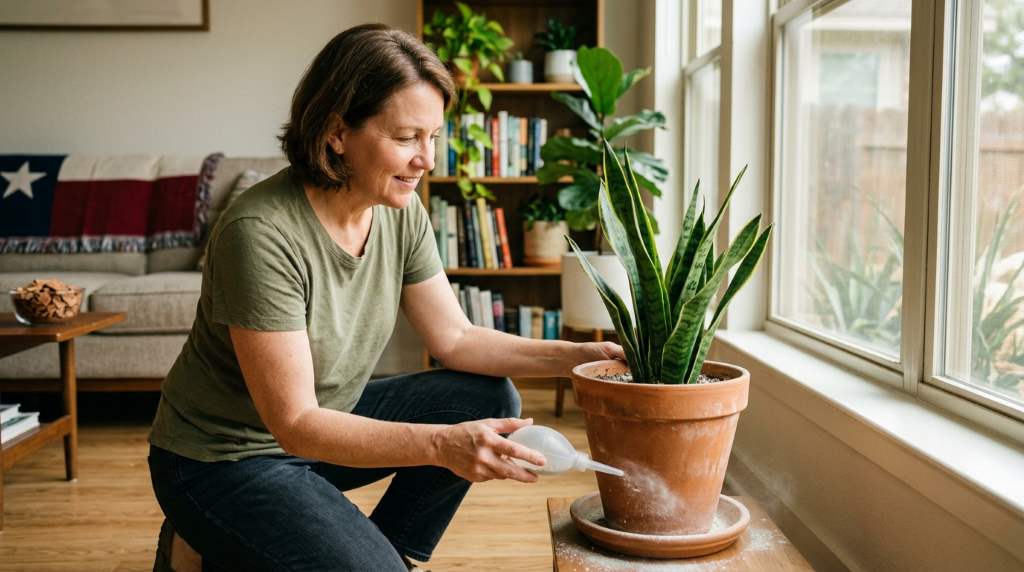
Many Austin homeowners prefer natural methods instead of strong chemical treatments indoors. Fortunately, several safe options help deter silverfish and centipedes around plant pots. Diatomaceous earth works well because it damages insect exoskeletons naturally. Homeowners can lightly sprinkle it around pots and nearby corners.
Essential oils also help repel pests when used carefully. Cedarwood and peppermint oils create scents that many insects avoid. However, homeowners should never apply concentrated oils directly onto plant leaves. Natural prevention methods work best when combined with proper cleaning and moisture control.
Reduce Humidity Inside the Home
High indoor humidity encourages pest infestations in many Texas homes. Silverfish especially thrive when humidity levels exceed 60%. Therefore, homeowners should monitor indoor moisture during humid seasons. Dehumidifiers can help maintain balanced air conditions throughout the house.
Bathrooms, kitchens, and laundry rooms often contribute extra moisture to nearby plant spaces. In addition, drying clothes indoors may increase humidity unexpectedly. Homeowners who reduce indoor moisture usually notice fewer pest issues around plants. Maintaining balanced humidity protects both plants and living spaces.
Inspect New Plants Before Bringing Them Indoors
New plants sometimes carry pests or eggs hidden in the soil. Homeowners often introduce silverfish or centipedes accidentally when buying plants from nurseries or garden centers. Therefore, inspecting every new plant before bringing it indoors remains important. Careful examination prevents larger infestations later.
Checking under leaves and around drainage holes helps reveal hidden problems. In addition, homeowners should isolate new plants for several days before placing them near existing indoor plants. This simple quarantine step reduces the chance of spreading pests throughout the home.
What to Inspect on New Plants
- Soil moisture condition
- Mold or fungus growth
- Insects near drainage holes
- Damaged leaves or stems
- Egg clusters under foliage
Seal Entry Points Around the Home
Silverfish and centipedes often enter homes through tiny gaps and cracks. Once inside, they search for damp hiding spots like indoor plant areas. Therefore, sealing entry points helps reduce indoor pest movement. Small repairs around windows and doors can make a major difference.
Austin homes may develop gaps because of seasonal heat expansion and shifting materials. Cracks around plumbing lines and baseboards also allow pests inside. Homeowners should use caulk or weather stripping to block these openings. Preventing entry reduces the chance of future infestations.
Use Proper Potting Soil
Low-quality or overly dense potting soil traps moisture for long periods. Damp soil increases the risk of silverfish and centipede activity around indoor plants. Therefore, homeowners should choose well-draining indoor soil mixes designed for container plants. Quality soil improves both drainage and root health.
Adding perlite or coarse sand also helps loosen compact soil. Furthermore, homeowners should replace old soil when it develops mold or persistent dampness. Fresh soil reduces hidden pest populations and supports healthier plant growth indoors.
Monitor Indoor Plants During Rainy Seasons
Austin experiences periods of heavy rainfall that increase indoor humidity levels quickly. During rainy weather, indoor plant soil dries more slowly than usual. Consequently, homeowners should adjust watering habits during these times. Ignoring seasonal moisture changes often leads to pest activity.
Checking pots more frequently during wet weeks helps prevent overwatering. In addition, moving plants closer to bright windows may improve drying conditions naturally. Seasonal monitoring keeps indoor environments balanced and less attractive to insects.
When to Call a Pest Professional
Some infestations become difficult to control with home remedies alone. Large numbers of silverfish or repeated centipede sightings may indicate deeper moisture problems inside the home. Therefore, homeowners should contact pest professionals when basic prevention methods fail. Early intervention prevents long-term structural and pest issues.
Professional inspections can identify hidden leaks or humidity sources contributing to infestations. In addition, experts may recommend safer indoor treatments for severe pest activity. Combining professional advice with regular plant care offers the best long-term results.
Conclusion
Keeping indoor plant pots free from silverfish and centipedes requires consistent care, smart watering habits, and proper moisture control. Austin homeowners can greatly reduce pest problems by improving drainage, increasing airflow, and cleaning plant areas regularly. Small preventive steps often stop infestations before they spread throughout the home. In addition, choosing the right plants and soil helps create healthier indoor conditions year-round. Start applying these practical tips today to protect your indoor plants and maintain a cleaner, pest-free home environment.
FAQs
Why do silverfish gather around indoor plant pots?
Silverfish gather around indoor plant pots because damp soil and humidity create ideal hiding conditions.
Can centipedes damage indoor plants?
Centipedes rarely damage plants directly, but they indicate excessive moisture and hidden pest activity.
How often should I water indoor plants in Austin?
Most indoor plants in Austin only need watering when the top inch of soil feels dry.
Is diatomaceous earth safe around indoor plants?
Yes, food-grade diatomaceous earth is generally safe for indoor plant areas when used carefully.
Should I replace potting soil after a pest infestation?
Yes, replacing contaminated soil helps remove hidden insects, eggs, and moisture buildup.
Related Reads
Explore: Understanding Unusual Water Issues in Miami Households
Explore: A beginner’s guide to fitted wardrobes
Check: How Induction Cooking Saves Time and Energy in Modern Kitchens