Fishing is one of the most accessible outdoor hobbies you can start. You do not need expensive equipment or years of experience to enjoy it. However, walking into a tackle shop for the first time can feel overwhelming. There are hundreds of lures in every shape, size, and color imaginable. So where do you even begin?
This guide is designed to make things simple. It will show you how to choose the right fishing lure kit as a beginner in 2026. Additionally, it will help you understand what each type of lure does, how to match lures to different fishing conditions, and what to look for when buying your first kit. By the end, you will feel confident and ready to head out on the water.
Why Your First Lure Kit Sets the Tone for Everything
Your starter fishing gear shapes your early experience with the sport. If your lures are poorly made or simply wrong for your local water, you will catch less. That can lead to frustration and make fishing feel harder than it actually is.
A well-chosen beginner lure kit, however, gives you a strong foundation. It covers a range of situations so you can experiment and learn what works. Therefore, choosing the right kit from the start is one of the most valuable easy fishing tips any experienced angler can share with a newcomer.
Think of your first kit as a starter toolbox. You want versatility. You want reliability. And you want to keep costs reasonable until you know exactly what your local fish respond to.
Understanding the Basic Types of Fishing Lures
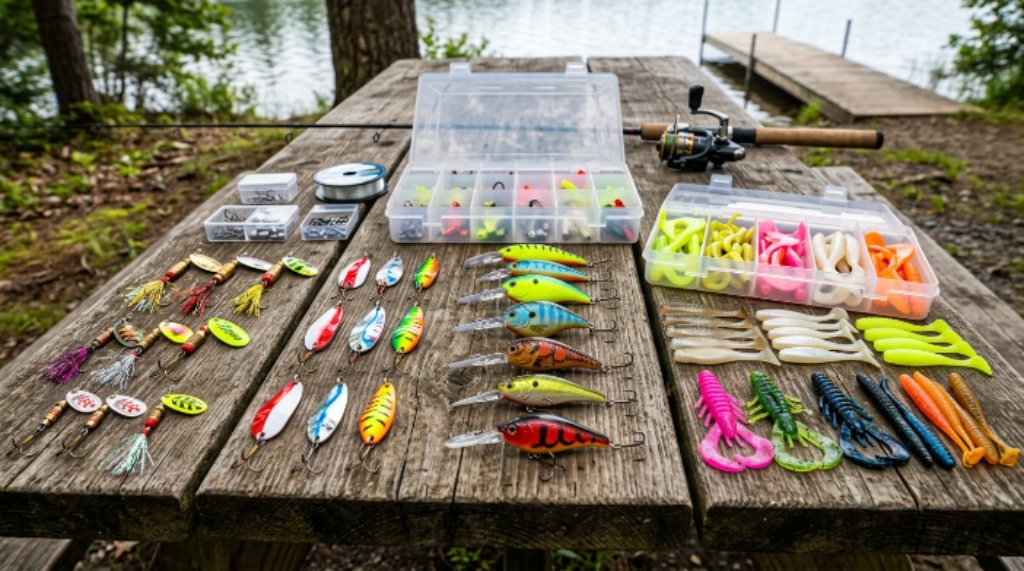
Before you buy anything, it helps to know what kinds of lures exist and what they are designed to do. There are five main types that beginners should become familiar with.
Spinners
Spinners are among the easiest lures to use. They have a metal blade that rotates as you reel them in. The spinning motion creates vibration and flash, which attracts fish. They work well in rivers, streams, and lakes. Additionally, they are effective across many species including bass, trout, and perch.
Spoons
Spoons are curved metal lures that wobble side to side as they move through the water. This wobble mimics an injured baitfish. They are particularly effective for predatory fish like pike and salmon. Spoons are simple to cast and simple to retrieve, making them great for beginners.
Soft Plastic Baits
Soft plastic lures come in many forms: worms, grubs, crayfish, and more. They feel and move like real prey in the water. They are especially effective for bass fishing. However, they require a bit more technique than spinners or spoons. Therefore, start simple with a basic worm on a hook.
Crankbaits
Crankbaits are hard-bodied lures with a lip at the front. That lip makes them dive when you reel them in. Different crankbaits dive to different depths. Shallow-diving crankbaits are ideal for beginners because they are easier to control and less likely to snag on the bottom.
Topwater Lures
Topwater lures float on the surface and create noise or splashing action. When a fish strikes a topwater lure, you can see and hear it happen. It is one of the most exciting experiences in fishing. However, topwater lures can be tricky to use. They work best during early morning or late evening when fish feed near the surface.
What to Look for in a Beginner Lure Kit
When it comes to lure selection, beginner kits are not all created equal. Here is what separates a smart purchase from a frustrating one.
Variety Over Quantity
Many cheap kits include fifty or more lures that are all essentially the same type. That is not helpful. Instead, look for a kit that includes several different lure types. You want at least one spinner, one spoon, a couple of soft plastics, and a shallow crankbait. Variety lets you test different approaches on the same fishing trip.
Hook Quality
Budget kits often use hooks that are soft or poorly sharpened. A dull hook means missed strikes. Look for kits that mention high-carbon steel or chemically sharpened hooks. These details are often listed in the product description and indicate better quality.
Color Range
Fish respond differently to colors based on water clarity and light conditions. A good starter kit should include lures in natural colors like silver, gold, and olive, as well as brighter options like chartreuse and orange. This gives you flexibility across different days and conditions.
Organized Storage
A kit that comes with a tackle box or organized tray is worth a little extra. Hooks and lures that tangle together become a time-wasting mess at the water. Good organization saves you frustration and keeps you focused on fishing.
Matching Your Lure Kit to Your Local Waters
The best lure kit for someone fishing a fast-moving river may be completely wrong for someone fishing a quiet lake. Therefore, knowing your environment is a critical step in smart lure selection.
In clear water, fish can see lures very well. Natural, realistic colors tend to work better. In murky water, bright colors and lures with strong vibration are more effective because fish rely on their lateral line to detect movement rather than their eyesight.
In rivers with strong current, heavy spinners and spoons cast well and hold depth. In shallow ponds or lakes, lightweight soft plastics and topwater lures are often ideal. Additionally, consider what fish live in your area. Research which species are common in your local water, then choose lures that imitate their natural prey.
How to Use Your New Lure Kit Effectively
Buying a good kit is only half the equation. How you use the lures matters just as much. Here are some practical tips to get you started.
- Start with a spinner or spoon on your first few trips. These are the most forgiving lures and require the least technique.
- Vary your retrieval speed. Sometimes a slow, steady reel works best. Other times a quick, jerky motion triggers strikes. Experiment until you find what works on a given day.
- Fish near structure. Fish tend to hide near rocks, fallen trees, dock pilings, and weed beds. Cast your lure close to these areas and retrieve it past them.
- Pay attention to time of day. Early morning and late afternoon are typically the most productive windows. Fish are more active and feeding aggressively during these periods.
- Keep a simple log. Note which lure you used, the weather, water conditions, and whether you caught anything. Over time, patterns emerge that make you a smarter angler.
Top Features Found in the Best Beginner Kits in 2026
The fishing gear market has evolved a lot in recent years. In 2026, the best beginner kits share several features that set them apart from older, lower-quality options.
Many quality kits now include rust-resistant hardware. This is especially important if you fish in saltwater or humid environments. Rusted hooks and connectors are both useless and potentially unsafe.
Additionally, eco-friendly materials are becoming more common. Lead-free weights and biodegradable soft plastics are better for aquatic ecosystems. Several brands now offer full beginner kits built around sustainable materials without a significant price increase.
Finally, many kits come with access to online tutorials or QR codes linking to instructional videos. This kind of built-in learning support is extremely helpful for those just getting started.
How Much Should You Spend on Your First Lure Kit?
You do not need to spend a lot to get started. A quality beginner lure kit typically costs between $15 and $45. Kits in this range offer good variety, decent hook quality, and a usable storage case.
However, avoid the temptation to buy the cheapest option available. Kits priced below $10 often contain lures that fall apart quickly. The hooks are usually dull and the paint chips off after a few uses.
On the other hand, spending $100 on your first kit is unnecessary. As your experience grows and your preferences become clearer, you can invest in specific lures that match your style. For now, keep it practical and affordable.
Conclusion
Picking the right fishing lure kit does not have to be complicated. Start by understanding the five basic lure types: spinners, spoons, soft plastics, crankbaits, and topwater lures. Then look for a kit that offers variety, quality hooks, a solid color range, and organized storage.
Match your kit to your local water conditions and the species in your area. Spend between $15 and $45 for a reliable starter option. Additionally, practice different retrieval techniques and target areas where fish naturally gather.
Fishing is a skill that grows with every trip you take. Therefore, focus on learning, stay patient, and enjoy the process. With the right starter fishing gear in your tackle box and a few proven easy fishing tips in mind, your first successful catch is well within reach.
Frequently Asked Questions
1. How many lures should a beginner kit include?
A good beginner kit should include between 15 and 30 lures covering at least four different types. More lures are not always better. Variety across types and colors is far more useful than a large quantity of similar pieces.
2. What is the easiest lure type for absolute beginners?
Spinners are widely considered the most beginner-friendly lure. You simply cast and reel at a steady pace. The spinning blade creates movement and flash that attracts fish automatically. They also work across a wide range of freshwater species, which makes them a smart starting point.
3. Can I use freshwater lures in saltwater?
Most freshwater lures are not built to withstand the corrosive nature of saltwater. Metal components rust quickly when exposed to salt. If you plan to fish in the ocean or brackish environments, look specifically for kits labeled as saltwater-rated or made from rust-resistant stainless steel and sealed hardware.
4. Does lure color really make a difference?
Yes, color genuinely affects results. In clear water, natural shades like silver, brown, and olive blend in and look realistic to fish. In murky or stained water, bright colors such as chartreuse, orange, and red are easier to detect. Additionally, on overcast days, darker or contrasting colors often outperform shiny metallic finishes.
5. Should I buy a pre-made kit or build my own lure collection?
For beginners, buying a pre-assembled kit is almost always the smarter choice. Kits offer variety at a lower combined cost than purchasing lures one by one. Once you have spent time on the water and identified which lures and techniques produce results for you, then building a custom collection tailored to your preferences makes much more sense.
Related Topics: