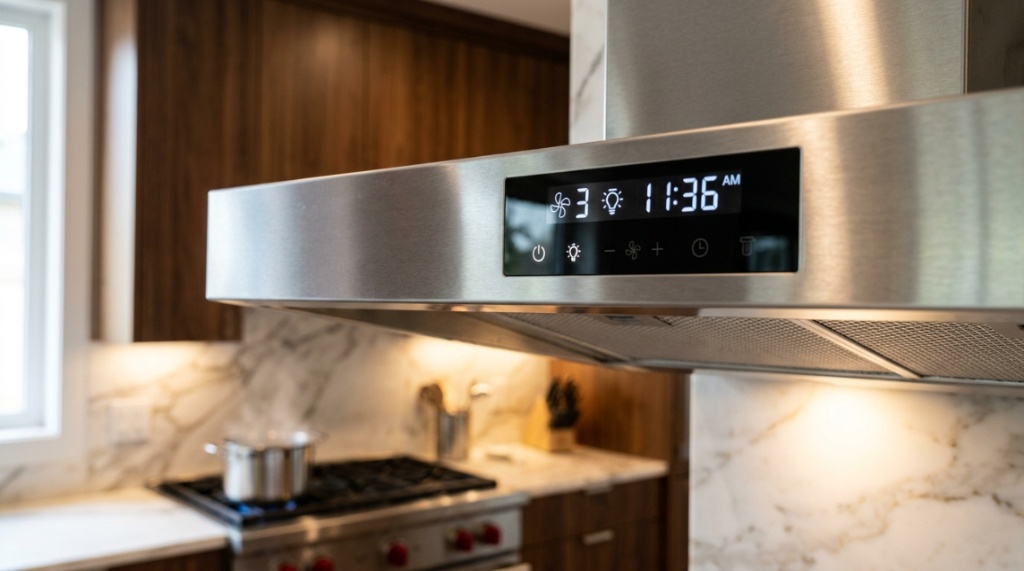
You stand in your kitchen, staring at the smoke clouding up from a hot pan of seared chicken. The fan above you is wheezing, moving air but not actually capturing the grease and odors. You need an upgrade—specifically, a powerful 30-inch hood that actually clears the air, protects your cabinets, and keeps your kitchen fresh. But with so many models on the market, choosing the right one feels overwhelming. You don’t want to waste money on a unit that looks good but performs poorly. This guide walks you through exactly what to look for, from airflow ratings to installation must-haves, so you can confidently pick a hood that delivers real, measurable performance.
What Makes a 30-Inch Kitchen Hood “Powerful”?
A powerful 30-inch hood is defined by three core metrics: high CFM (cubic feet per minute) airflow, strong suction pressure measured in sones, and an efficient capture area that matches your cooktop. Without all three, you get noise without performance.
Understanding CFM and Why It Matters Most
CFM tells you how much air the fan moves every minute. For heavy cooking—like frying, wok cooking, or searing steaks—you need at least 600 CFM. If you have a gas cooktop, many building codes require at least 1 CFM per 100 BTUs of burner output, so a 60,000 BTU range needs 600 CFM minimum. For electric or induction cooktops, 400–600 CFM usually suffices unless you cook heavily.
The Role of Sones in Real-World Performance
Sones measure perceived loudness. A hood running at 4.5 sones or below is considered quiet enough for normal conversation. Many powerful hoods push 600+ CFM at 6–9 sones on high speed, which is loud but tolerable for short cooking bursts. Look for variable-speed controls so you can run lower speeds for simmering and high speed only when searing.
Capture Area and Duct Size
A powerful motor is useless if the hood’s capture area is too small or the ductwork is undersized. The hood should be at least as wide as your cooktop (30 inches here) and ideally 3–6 inches wider on each side. The duct should be 6 inches or larger in diameter, with smooth metal walls—no ribbed flex duct, which cuts airflow by 30–50 percent.
How Do You Determine the Right CFM for Your Kitchen?
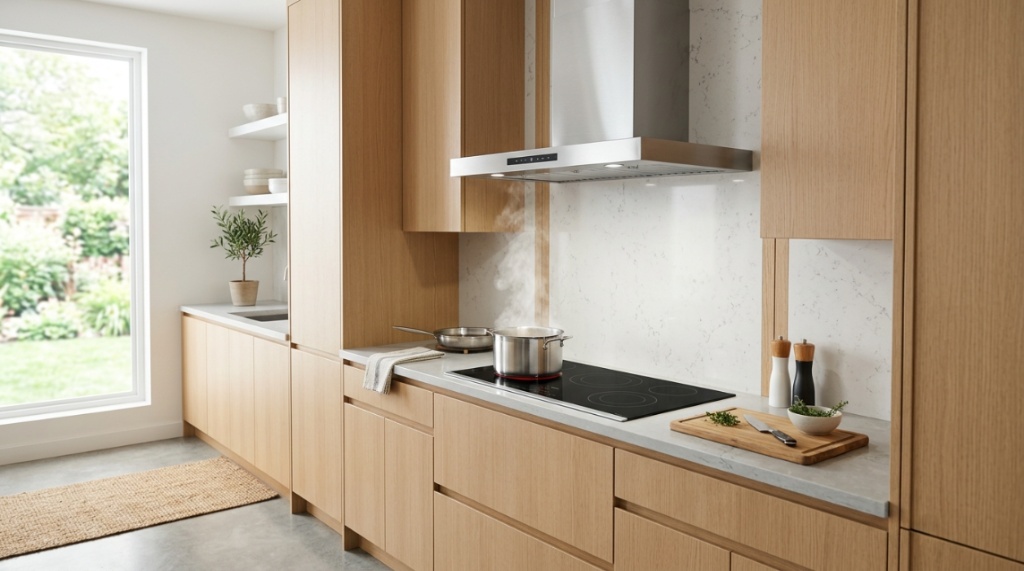
Start by calculating your total cooktop BTU output. Sum the BTU ratings of all burners, then divide by 100. That’s your minimum CFM for gas ranges. For electric or induction, multiply your cooktop’s width in inches by 10 to get a baseline CFM (300–400 CFM for a 30-inch cooktop). Then add extra for heavy frying or wok cooking.
Gas Cooktop CFM Formula
If your 30-inch gas range has four burners totaling 30,000–60,000 BTUs, you need 300–600 CFM minimum. Many professional-style ranges push 60,000–90,000 BTUs, requiring 600–900 CFM. Always size up if you can—more CFM means faster clearing of smoke and odors.
Induction and Electric Cooktop Considerations
Induction ranges produce less airborne grease and smoke than gas, so you can comfortably use 400–600 CFM. However, if you use a wok or do a lot of high-heat searing on induction, go with 600 CFM for a safety margin. A powerful 30-inch hood with 600 CFM works beautifully for both gas and induction, giving you flexibility for future range upgrades.
The Relationship Between CFM and Makeup Air
When you install a hood with 600 CFM or more, many local building codes require a makeup air system. That’s because powerful fans can depressurize your home, backdraft water heaters or furnaces, and pull in outside air through gaps. Check your local code before buying; some hoods include a built-in makeup air damper, but most require an external unit.
Which Hood Type Delivers the Best Performance?
Three main types dominate the 30-inch range hood market: under-cabinet, wall-mount chimney, and island. Each has distinct performance trade-offs.
Under-Cabinet Hoods: Compact but Capable
Under-cabinet hoods mount directly below your upper cabinets. They’re the most common and often the easiest to install. For a 30-inch size, look for models with at least 600 CFM and a deep capture area (at least 18 inches deep). Many budget-friendly options top out at 400 CFM, but brands like Broan and Zephyr offer 600 CFM under-cabinet models that fit standard 30-inch spaces.
Wall-Mount Chimney Hoods: Maximum Capture Power
Wall-mount chimney hoods mount directly to the wall above the cooktop, with no upper cabinet in the way. This design allows a larger duct and better capture of rising steam and grease. They often feature higher CFM ratings (800–1200 CFM) and wider capture areas. If you have a gas range and cook heavily, this is your best option for a powerful 30-inch hood.
Island Hoods: Design Meets Function
Island hoods hang from the ceiling over a cooktop on an island. They typically offer high CFM (600–1200 CFM) but require careful planning for ductwork through the ceiling. Because they lack proximity to walls, they need a wider capture area (often 36 inches) to effectively trap grease, even for a 30-inch cooktop. If your kitchen is an island layout, prioritize models with dual-level filtration and adjustable baffles.
What Features Should You Prioritize for Real Power?
Don’t get distracted by shiny extras. Focus on features that directly improve airflow, filtration, and usability.
Baffle Filters vs. Mesh Filters
Baffle filters are made of layered stainless steel that forces air to change direction, trapping grease more effectively than mesh filters. They’re easier to clean (dishwasher-safe) and last longer. Mesh filters clog quickly and reduce airflow over time. For a powerful hood, insist on baffle filters.
Variable Speed Controls and Boost Mode
A simple hi-lo switch won’t cut it. Look for at least three speeds: low for simmering (200–300 CFM), medium for everyday cooking (400–500 CFM), and high for frying (600+ CFM). Some models include a 10-minute boost mode that runs at full speed then reverts to medium—ideal for clearing a kitchen after heavy smoke. As you upgrade your kitchen ventilation, remember that pairing your setup with efficient appliances matters—learn more about how induction cooking saves time and energy in modern kitchens to optimize your entire cooking space.
Ducting: Recirculating vs. Ducted
Ducted hoods vent air outside, which is always more effective at removing odors, moisture, and grease. Recirculating models filter air through charcoal then release it back into the kitchen. They remove some odors but not all, and they don’t remove heat or moisture. If your kitchen layout allows, always choose ducted. If you must recirculate, buy a model with replaceable charcoal filters and plan to change them every 3–6 months.
How Does Ductwork Affect a Hood’s Real-World Power?
Even the highest-CFM hood loses power if your ductwork is poorly designed. The duct diameter, length, and number of turns all reduce effective airflow.
Duct Diameter and Material
Use 6-inch round smooth metal duct as a minimum. Larger ducts (7 or 8 inches) are better for hoods over 800 CFM. Avoid flexible aluminum ducts—they cause turbulence and cut CFM by 20–30 percent. Smooth steel or galvanized pipe is best.
Duct Length and Turns
Every 90-degree turn reduces CFM by 10–20 percent. Keep the duct run as short and straight as possible. If you must turn, use two 45-degree elbows instead of one 90-degree turn. The total equivalent length (actual length plus turn penalties) should be no more than 25–30 feet for a 600 CFM hood to maintain full performance.
Roof Cap and Wall Cap Options
The exterior cap matters, too. Look for a cap with a backdraft damper that opens easily when the fan runs and closes tightly when off. Some caps include a screen to keep out birds and debris. A poor-quality cap can add 10–20 percent resistance to airflow.
When Should You Choose a 30-Inch Over a Larger Size?
Many home cooks assume bigger is better, but a properly sized 30-inch hood often outperforms a poorly fitted 36-inch model. Stick with 30 inches if your cooktop is 30 inches wide and your space constraints (cabinets, wall layout) don’t allow a wider unit.
Space and Cabinet Constraints
If your cooktop is centered between cabinets, a 30-inch hood fits neatly without overlapping cabinet faces. A 36-inch hood often overhangs, requiring custom filler panels or cabinet modifications. That extra width doesn’t help if the hood’s capture area isn’t aligned with the cooktop burners.
Performance Matching to Cooktop Size
A 30-inch cooktop with front burners and rear burners produces smoke across a 24–28 inch width. A 30-inch hood covers that area well. Only upgrade to 36 inches if you have a professional range with six burners or a griddle, which spreads heat across a wider surface.
Can a Budget-Friendly 30-Inch Hood Still Be Powerful?
Yes, absolutely. A powerful hood doesn’t have to cost a fortune. Many affordable models deliver 600 CFM with baffle filters and variable speeds for under $400. The key is separating marketing hype from real specs.
Specs That Define Value in Affordable Hoods
For under $500, look for: 600 CFM or higher, baffle filters (not mesh), at least three fan speeds, and a ducted option. Some budget models claim 800 CFM but use cheap motors that degrade after six months. Read reviews from real buyers about performance after six months of use, not just initial impressions.
Where to Find Reliable Budget Models
Shop from reputable appliance dealers and read spec sheets carefully. A powerful 30-inch hood from a trusted retailer often includes a warranty and support that big-box stores don’t match. Look for brands with dedicated customer service and replacement parts availability.
When to Spend More for Performance
If you cook professionally or entertain often, spending $800–$1,500 on a hood with 900+ CFM, quiet operation (under 4 sones at medium speed), and a high-quality motor is worth it. But for most home cooks, a 600 CFM unit with baffle filters and good ductwork handles everything from stir-fry to Thanksgiving turkey.
What Installation Mistakes Kill a Hood’s Power?
Even the best hood fails if installed poorly. Avoiding these common mistakes ensures your hood performs as designed.
Mounting Height Errors
For gas ranges, mount the hood 24–30 inches above the cooktop. Electric and induction ranges allow 18–24 inches. Mounting too high allows smoke to escape before reaching the fan. Mounting too low interferes with large pots and blocks your view. Measure carefully and use the manufacturer’s recommended height.
Poor Duct Sealing
Leaky duct joints reduce suction and allow grease to accumulate inside walls. Use metal tape (not duct tape, which degrades) to seal every joint. Foil tape rated for HVAC use works best. Check for gaps before installing the drywall or ceiling finish.
Ignoring Electrical Requirements
Many powerful hoods require a dedicated 15- or 20-amp circuit, especially those with 600+ CFM motors and internal lights. Running a hood on a shared circuit can cause breaker trips and reduced fan speed. Have an electrician run a new line if needed before installation.
How Do You Test a Hood’s Actual Performance After Installation?
Don’t trust the marketing specs alone. Run a simple smoke test: boil a pan of water with a few drops of oil to create steam, then turn the hood to high. If steam escapes forward or backward, the hood isn’t capturing properly. You may need to adjust the height or check for duct blockages.
Measuring CFM at Home
You can estimate CFM with an anemometer (airflow meter). Place it in the duct opening at the hood’s base, measure the airspeed in feet per minute, multiply by the duct cross-sectional area in square feet (for 6-inch round, that’s 0.196 square feet). A reading of 3,000 FPM × 0.196 = 588 CFM, close to the rated 600 CFM. If you get significantly less, you have duct issues.
Listening for Noise and Vibration
Rattling noise often means loose mounting or duct connections. Tighten all brackets and verify that the duct doesn’t contact wall studs or ceiling joists. Apply vibration-dampening pads between the hood and mounting surface for a quieter operation.
Checking Filter Condition Monthly
Even with baffle filters, grease builds up. Wash baffle filters in the dishwasher every 2–4 weeks if you cook daily. Clogged filters reduce CFM by 20–40 percent. Mark a reminder on your calendar to clean them.
Frequently Asked Questions
What is the best CFM for a 30-inch gas range?
For a standard 30-inch gas range with 4 burners (30,000–60,000 BTUs total), 600 CFM is ideal. This handles heavy frying, searing, and wok cooking without overwhelming the kitchen’s makeup air requirements.
Is a 400 CFM hood enough for a 30-inch cooktop?
400 CFM is adequate for light cooking like boiling pasta, steaming vegetables, or simmering sauces. For any significant frying, searing, or high-heat cooking, 600 CFM or higher is recommended for effective smoke and odor removal.
Can I use a recirculating hood instead of ducted?
Yes, but only if you cannot install ductwork. Recirculating hoods remove some odors via charcoal filters but do not remove heat or moisture. They are less effective overall, so choose ducted whenever possible.
Do I need makeup air for a 600 CFM hood?
Most local building codes require makeup air for hoods with 600 CFM or higher. This prevents backdrafting of gas appliances and maintains indoor air quality. Check with your local permit office before purchase.
How often should I clean my range hood filters?
Baffle filters should be cleaned every 2–4 weeks if you cook daily. Mesh filters need cleaning even more frequently—every 1–2 weeks. Charcoal filters in recirculating models need replacement every 3–6 months.
What is the difference between sones and decibels?
Sones measure perceived loudness, while decibels measure sound pressure. A 1-sone increase roughly doubles perceived loudness. Most people find 4.5 sones comfortable for conversation; 9 sones is loud but tolerable for short cooking bursts.
Can a powerful hood remove cooking odors completely?
Yes, a ducted hood with 600+ CFM and proper installation can remove over 90% of cooking odors, steam, and grease particles. Recirculating hoods typically remove 50–70% of odors, depending on charcoal filter quality.
Conclusion
Choosing a powerful 30-inch hood comes down to matching CFM to your cooktop, selecting the right type for your layout, and investing in quality ductwork. Prioritize baffle filters, variable speeds, and at least 600 CFM for heavy cooking. Don’t overspend on features you don’t need, but don’t cut corners on installation—poor ductwork ruins even the best hood. Test performance after installation and clean filters regularly to maintain peak power. With the right hood properly installed, your kitchen stays smoke-free, your cabinets stay grease-free, and you cook with confidence.