
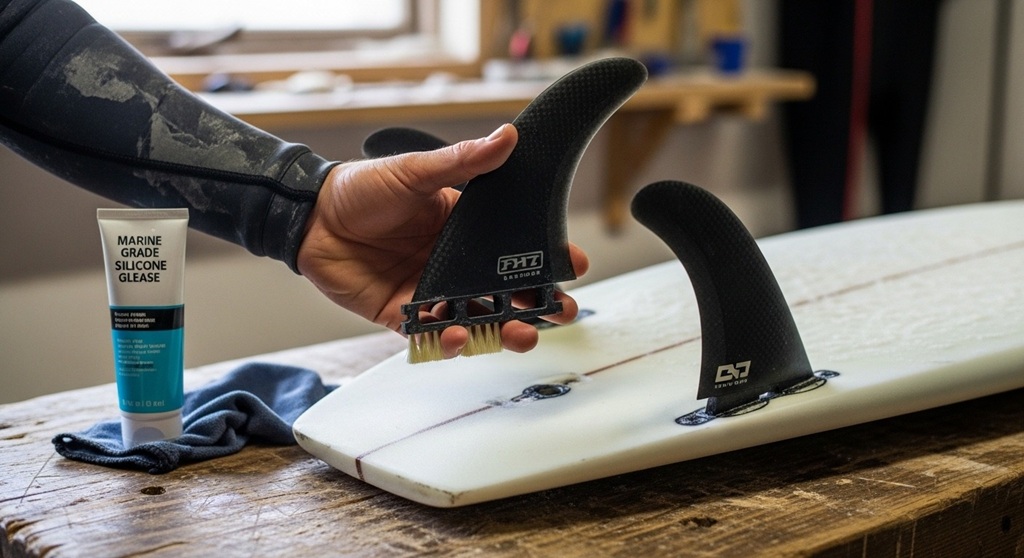
Surfboard fins may look small, but they control how your board moves through water. They affect speed, direction, and stability. If fins become dirty, loose, or damaged, performance drops immediately. Many surfers focus on wax, boards, and wetsuits. Yet fin maintenance is often ignored.
Maintaining surfboard fins simply means cleaning, inspecting, and storing them properly so they continue to perform as designed. Saltwater, sand, and repeated impact can weaken fin bases and reduce hydrodynamic efficiency. Over time, neglected fins can create drag, reduce maneuverability, and even break during a session.
According to surf equipment repair data from multiple surf shops in California and Australia, nearly 35–40% of board performance issues reported by recreational surfers are linked to worn, dirty, or loose fins. This makes regular maintenance one of the easiest ways to protect performance.
This guide explains exactly how to clean surfboard fins, prevent damage, and extend their lifespan. You will also learn practical surf fin care tips used by experienced surfers and surfboard technicians. Whether you use removable fin systems or glassed-on fins, the following steps help keep your board responsive and reliable.
Why Is Maintaining Surfboard Fins Important for Performance?
Short answer: Surfboard fins control stability, turning, and speed. Dirty or damaged fins increase drag and reduce maneuverability.
Surfboard fins act like the steering system of your board. They create resistance against sideways movement, allowing surfers to control direction and generate drive.
When fins are clean and properly aligned, water flows smoothly across the surface. This is known as laminar flow. Smooth water flow improves speed and control.
However, when fins accumulate salt buildup, wax residue, or scratches, water flow becomes turbulent. Turbulence creates drag and slows the board.
Common Problems Caused by Poor Fin Maintenance
- Reduced turning responsiveness
- Loss of speed while paddling or riding
- Unstable board control
- Increased chance of fin box damage
- Premature fin breakage
A small maintenance routine after every surf session can prevent these issues.
How Do You Clean Surfboard Fins Properly?
Short answer: Rinse fins with fresh water, remove salt and sand, and gently scrub with mild soap.
Cleaning fins is the most important part of surf fin care. Saltwater contains minerals that crystallize after drying. These deposits accumulate along the fin base and screws.
Here is a simple step-by-step cleaning process.
Step-by-Step Process to Clean Surfboard Fins
- Rinse the entire board and fins with fresh water
- Use a soft brush or cloth to remove sand and debris
- Apply mild soap to dissolve salt deposits
- Scrub gently along fin edges and base
- Rinse again thoroughly
- Dry using a microfiber towel
Avoid using harsh chemicals or abrasive pads. These can damage fiberglass or composite fin materials.
When Should You Clean Surfboard Fins?
- After every surf session
- Before storing the board for long periods
- After surfing in sandy beach breaks
Regular cleaning prevents corrosion and keeps fins functioning smoothly.
What Are the Best Surf Fin Care Tips for Long-Term Use?
Short answer: Inspect fins regularly, tighten screws, store them safely, and avoid unnecessary impact.
Experienced surfers follow a few simple habits that extend fin life. These small routines prevent expensive repairs.
Top Surf Fin Care Tips
- Check fin screws before every session
- Remove fins before traveling
- Inspect for cracks or chips
- Avoid walking with the board on rocky areas
- Use fin covers during transport
Surfboard technicians report that most fin damage occurs during transportation, not surfing. Boards knocked against walls, car doors, or rocks often chip fin edges.
How Often Should You Inspect Surfboard Fins?
Short answer: Inspect fins before and after each surf session.
Frequent inspection helps detect small issues early. Minor cracks or loose screws can become serious problems in the water.
What to Check During Fin Inspection
- Loose fin screws
- Cracks near the base
- Worn fin edges
- Sand stuck inside the fin box
- Fin alignment
If a fin appears bent or unstable, remove it immediately and inspect the fin box.
What Is the Best Way to Store Surfboard Fins?
Short answer: Store fins in a dry, padded case away from sunlight.
Proper storage prevents damage when fins are not in use. Heat, humidity, and UV exposure can weaken fiberglass materials.
Recommended Storage Practices
- Remove removable fins after surfing
- Store them in a padded fin pouch
- Keep away from direct sunlight
- Avoid stacking heavy objects on fins
Many surfers keep spare fins organized using labeled fin wallets.
Should You Remove Surfboard Fins After Surfing?
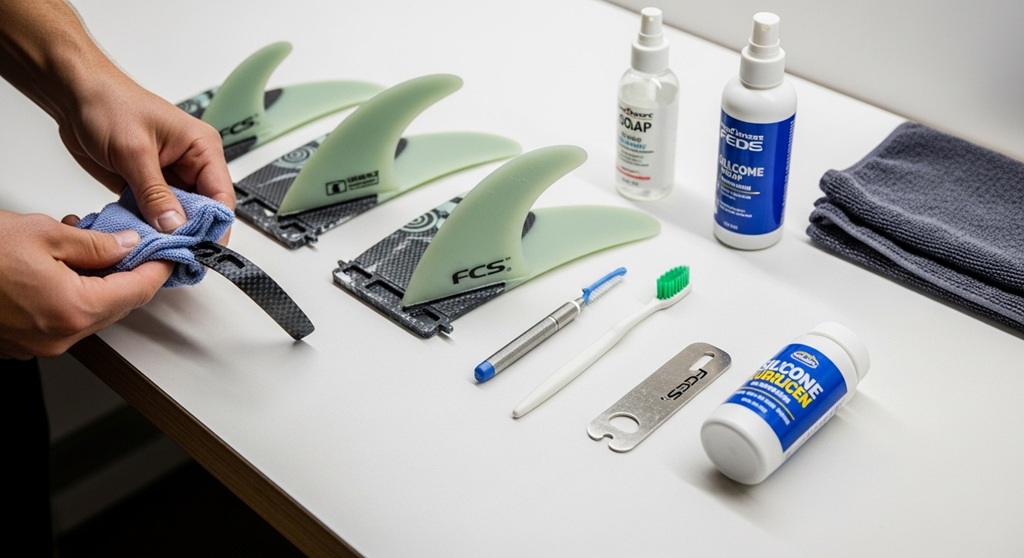
Short answer: Removing fins after surfing prevents corrosion and protects fin boxes.
Saltwater trapped inside fin boxes can cause corrosion on metal screws and inserts.
Removing fins allows you to clean the entire fin box and dry it properly.
Benefits of Removing Fins
- Better cleaning access
- Reduced corrosion risk
- Easier transport
- Lower chance of fin box damage
However, glassed-on fins cannot be removed. These require careful cleaning instead.
What Tools Are Needed for Surfboard Fin Maintenance?
Short answer: A fin key, soft brush, microfiber cloth, and mild soap.
| Tool | Purpose |
|---|---|
| Fin key | Tighten or remove fin screws |
| Soft brush | Remove sand and salt buildup |
| Microfiber cloth | Dry fins and prevent water spots |
| Mild soap | Clean mineral deposits |
| Fin pouch | Safe storage and travel protection |
These basic tools cost very little but significantly improve fin lifespan.
How Can You Prevent Surfboard Fin Damage?
Short answer: Avoid impact, transport boards carefully, and use protective covers.
Surfboard repair shops report that over 50% of fin damage occurs outside the water. Most breakages happen when boards fall during transport.
Common Causes of Fin Damage
- Dropping boards on hard surfaces
- Transporting boards without padding
- Surfing in shallow rocky areas
- Loose fin screws
Preventive Measures
- Use board bags during travel
- Carry the board with fins facing forward
- Keep fins away from concrete surfaces
- Check screws regularly
These habits significantly reduce repair costs.
Case Study: How Regular Fin Maintenance Improved Board Performance
A small surf school in Queensland tracked equipment maintenance for one season.
The school used 30 beginner surfboards with removable fins. Initially, instructors noticed frequent issues with board stability and slow turning.
After implementing a weekly fin cleaning and inspection routine, results improved.
Maintenance Impact
| Metric | Before Maintenance | After Maintenance |
|---|---|---|
| Fin damage incidents | 14 per season | 5 per season |
| Loose fin complaints | 21 cases | 6 cases |
| Repair costs | $2,300 | $900 |
The case study demonstrates that simple cleaning and inspection routines significantly reduce equipment issues.
Conclusion: Why Surf Fin Maintenance Should Be Part of Every Surf Routine
Surfboard fins play a crucial role in speed, balance, and maneuverability. Yet they are often overlooked during board maintenance.
Keeping fins clean, secure, and properly stored protects both performance and safety. Small habits like rinsing with fresh water, inspecting screws, and using fin covers can prevent most problems.
Consistent maintenance also saves money by reducing repairs and extending equipment lifespan.
If you want your board to perform at its best every session, make fin care part of your routine. Start by checking your fins today and applying these simple surf fin care tips. Your board—and your ride—will feel the difference.
Frequently Asked Questions About Surfboard Fin Maintenance
How do you clean surfboard fins quickly after surfing?
Rinse the fins with fresh water immediately after surfing. Use a soft brush to remove sand and wipe them dry with a microfiber cloth. This prevents salt buildup.
Can dirty fins affect surfboard performance?
Yes. Salt deposits, scratches, and debris increase drag and disrupt water flow. This reduces speed and turning efficiency.
How often should you replace surfboard fins?
Most fins last several years if maintained properly. Replacement is necessary if fins develop cracks, chips, or structural weakness.
Is it safe to surf with loose fins?
No. Loose fins can fall out during a session or damage the fin box. Always tighten screws before entering the water.
Should beginners maintain surfboard fins regularly?
Yes. Beginners often surf in sandy areas where debris accumulates quickly. Cleaning and inspection help avoid equipment problems.
Can surfboard fins rust?
The fins themselves usually do not rust, but metal screws and inserts can corrode if exposed to saltwater without cleaning.
What is the safest way to transport surfboard fins?
Remove removable fins and store them in a padded fin pouch. This prevents bending or cracking during travel.
Read More Also: How Hearing Loss Can Lead To Social Isolation
Find out: What is Hyperacusis and What Should You do if You Have it?