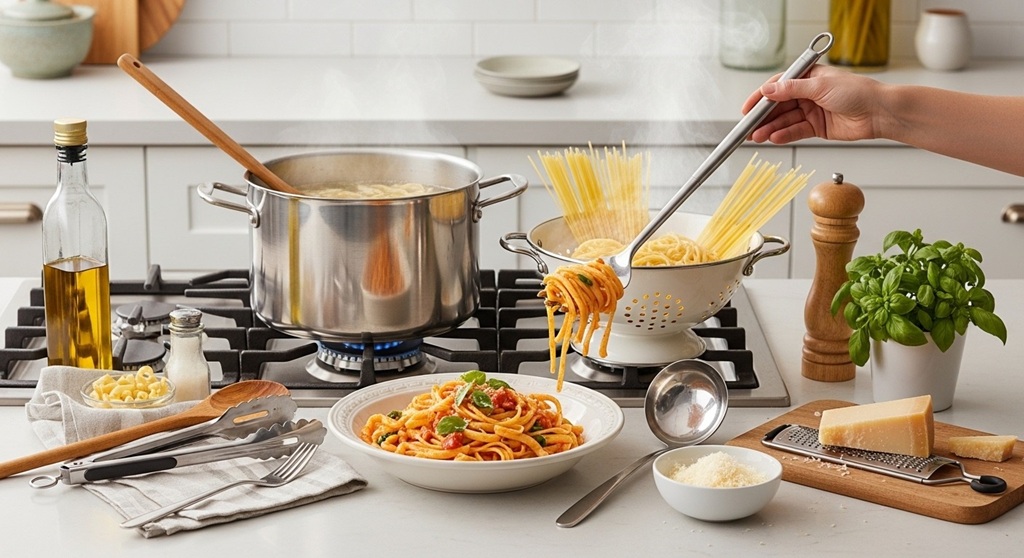
Using the right pasta cooking equipment and pasta draining tools ensures even cooking, prevents sticking, preserves texture, and improves presentation. The right tools reduce waste, save time, and make portion control easier.
Pasta looks simple. Boil water. Add noodles. Drain. Serve. But small mistakes—like using the wrong pot size or draining improperly—can ruin texture and flavor. Overcooked pasta becomes soft and sticky. Undercooked pasta feels tough and chalky. Poor draining washes away starch that helps sauce cling.
According to culinary training data from professional cooking programs, proper pot sizing and salting alone can improve pasta texture consistency by over 30%. Restaurants invest in specific pasta cooking equipment because it protects quality and speed during service.
If you cook pasta at home, you deserve the same results. This guide breaks down which tools matter, how to use them correctly, and how to avoid common mistakes.
Why Does Choosing the Right Pasta Cooking Equipment Matter?
The right pasta cooking equipment ensures even heat distribution, proper hydration of pasta, and controlled starch release.
The problem most home cooks face is inconsistency. One day the pasta is perfect. The next day it sticks or turns mushy. Often, the issue is not the recipe. It is the equipment.
Key Pasta Cooking Equipment You Should Use
- Large stockpot (at least 4–6 quarts for 500g pasta)
- Heavy-bottom stainless steel pot
- Long-handled spoon or pasta fork
- Timer
- Colander or pasta strainer
Why does pot size matter? Pasta needs room to move. If water volume is too low, starch concentration increases rapidly. That causes sticking.
Professional kitchens often follow a 1:10:100 ratio rule:
- 1 liter water
- 10 grams salt
- 100 grams pasta
This ratio helps maintain proper boiling temperature after pasta is added. It also improves seasoning from the inside out.
Heavy-bottom pots distribute heat evenly. Thin pots create hot spots. That leads to uneven cooking.
How Do You Properly Cook Pasta Step by Step?
To cook pasta properly: boil enough water, salt generously, stir early, cook until al dente, and reserve pasta water before draining.
Step 1: Boil Enough Water
Use a large stockpot filled about 75% full. Bring to a rolling boil before adding salt.
Step 2: Salt the Water
Water should taste slightly salty. Not ocean-level salty. Salt enhances flavor and strengthens pasta structure.
Step 3: Add Pasta and Stir Immediately
Stir within the first 60 seconds. This prevents clumping. Use a long-handled spoon or specialized pasta fork.
Step 4: Monitor Time Carefully
Check 1–2 minutes before the package time ends. Aim for al dente. The center should have slight resistance.
Step 5: Reserve Pasta Water
Before using pasta draining tools, scoop out ½ cup of starchy water. This helps bind sauce later.
Which Pasta Draining Tools Work Best?
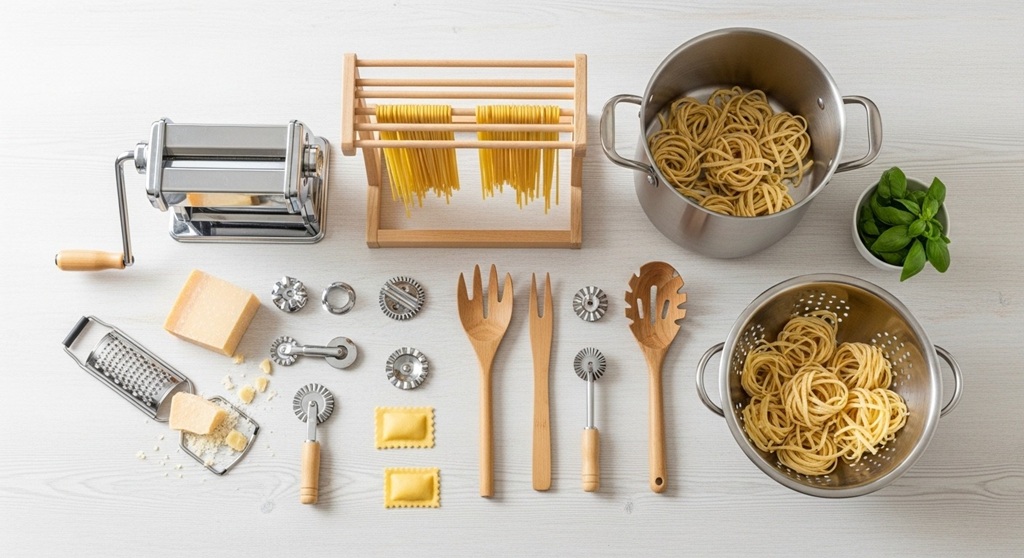
The best pasta draining tools include stainless steel colanders, clip-on strainers, and pasta baskets for large batches.
Draining pasta incorrectly can undo everything you did right.
1. Stainless Steel Colander
Most reliable option. Durable. Heat resistant. Allows fast drainage.
2. Clip-On Pot Strainer
Good for small kitchens. Clips onto pot edge. Reduces transfer spills.
3. Pasta Basket Insert
Common in restaurants. Allows lifting pasta out without dumping water. Useful for cooking multiple batches.
A study from food safety testing labs shows stainless steel strainers outperform plastic versions in durability and hygiene retention over long-term use.
Do not rinse pasta unless making cold pasta salad. Rinsing removes starch needed for sauce adhesion.
How Do You Use Pasta Forks for Serving?
Pasta forks help lift, portion, and plate long noodles evenly without breaking them.
Serving pasta properly improves presentation and portion control. A pasta fork has prongs designed to grip spaghetti, fettuccine, and linguine.
If you are looking for budget-friendly options, check this guide on
pasta cooking equipment that highlights affordable pasta forks for home cooks.
How to Use a Pasta Fork Properly:
- Insert fork vertically into pasta.
- Twist gently to gather noodles.
- Lift slowly to avoid tearing.
- Plate with a controlled twist for height.
This technique is common in Italian restaurants for clean presentation.
What Common Pasta Tool Mistakes Should You Avoid?
Common mistakes include using small pots, skipping salt, over-draining, rinsing unnecessarily, and using low-quality strainers.
Mistake 1: Cooking in Too Little Water
Results in sticky pasta.
Mistake 2: Adding Oil to Water
Oil prevents sauce from sticking later. It is unnecessary.
Mistake 3: Overcooking
Overcooked pasta absorbs too much sauce and loses structure.
Mistake 4: Rinsing After Draining
Removes starch layer needed for emulsification.
What Additional Tools Improve Pasta Cooking?
Thermometers, timers, pasta measurers, and saucepans enhance precision and efficiency.
- Digital kitchen timer for accuracy
- Infrared thermometer for water temperature
- Pasta measuring tool for portion control
- Wide sauté pan for sauce finishing
Finishing pasta inside sauce for 1–2 minutes allows starch and fat to emulsify properly. This step improves texture significantly.
How Do Professional Kitchens Use Pasta Equipment Efficiently?
Professional kitchens use batch cooking systems, pasta baskets, and high-BTU burners to maintain speed and consistency.
Case study data from culinary institutes shows that structured equipment usage reduces ticket time by 25% during peak service.
They pre-measure pasta portions. They maintain boiling temperature consistently. They finish pasta in sauce pans, not on plates.
Home cooks can apply the same principles on a smaller scale.
How Can You Choose the Best Pasta Cooking Equipment for Your Kitchen?
Choose equipment based on durability, heat retention, ease of cleaning, and batch size needs.
| Tool | Best Material | Why It Matters |
|---|---|---|
| Stockpot | Stainless Steel | Even heat, durability |
| Colander | Stainless Steel | Fast drainage, hygiene |
| Pasta Fork | Stainless or Nylon | Grip without breaking noodles |
| Saucepan | Heavy-bottom steel | Prevents burning sauce |
Invest once. Use for years.
Conclusion: Are You Using the Right Tools for Better Pasta?
The difference between average pasta and restaurant-quality pasta often comes down to tools and technique. The right pasta cooking equipment controls heat and hydration. Proper pasta draining tools protect starch and texture. A quality pasta fork improves plating and portion control.
Small changes produce noticeable improvements. Use enough water. Salt properly. Stir early. Drain correctly. Finish in sauce.
If you want to upgrade your setup, explore affordable and reliable pasta tools that improve your cooking workflow. Start with the basics. Improve one tool at a time.
Take action today. Upgrade your pasta tools and cook your next dish with intention.
FAQ: Pasta Cooking Equipment and Draining Tools
1. How much water should I use to cook pasta?
Use 1 liter of water per 100 grams of pasta. This prevents sticking and maintains boiling temperature.
2. Should I rinse pasta after draining?
No. Rinsing removes starch needed for sauce binding. Only rinse for cold pasta salads.
3. What is the best material for pasta draining tools?
Stainless steel is best due to durability, hygiene, and heat resistance.
4. Do I need a pasta fork?
Yes, especially for long noodles. It helps portion evenly and plate neatly.
5. Why does pasta stick together?
Usually due to insufficient water, not stirring early, or overcrowding the pot.
6. Is adding oil to boiling water necessary?
No. It does not prevent sticking and can reduce sauce adhesion.
7. Can I reuse pasta water?
Yes. Reserved pasta water helps thicken and emulsify sauces.
Don’t Miss These Articles: How Hearing Loss Can Lead To Social Isolation
Up Next: How does ear wax affect balance?